0086-18057388688


Knitted Fabrics: Structure, Types, Properties, and Applications
Knitted fabrics are a versatile and integral part of the textile industry, widely used in clothing, industrial applications, and technical textiles. Unlike woven fabrics, which are made by interlacing two sets of yarns at right angles, knitted fabrics are produced by interlooping one or more yarns, resulting in distinctive elasticity, softness, and unique structural characteristics.
1. Introduction to Knitted Fabrics
Knitting is a method of fabric formation in which yarns are transformed into a series of connected loops. The loops, known as stitches, interlink with one another to form a cohesive and flexible textile structure. The primary difference between knitting and weaving lies in the looped structure: weaving produces a stable, less elastic fabric, whereas knitting inherently creates a fabric with stretch and recovery.
Knitted fabrics are classified into two main categories based on the knitting method: weft knitting and warp knitting. Each category has subtypes and unique characteristics, which influence their mechanical behavior, aesthetic appeal, and end-use.
2. Structure of Knitted Fabrics
The structure of a knitted fabric is defined by the arrangement of loops in the fabric. Key elements include:
- Stitch: The fundamental loop in a knitted fabric. Types include knit stitches (v-shaped) and purl stitches (reversed V-shaped).
- Course: A horizontal row of loops.
- Wale: A vertical column of loops.
- Gauge: The number of stitches per unit length; higher gauge results in finer, denser fabrics.
The interplay of stitches, courses, and wales gives knitted fabrics their characteristic stretch, drape, and resilience. The elasticity of knitted fabrics is primarily in the direction perpendicular to the wales, i.e., across the courses.
3. Types of Knitted Fabrics
3.1 Weft Knitting
Weft knitting involves forming loops horizontally across the fabric. It can be performed manually using hand knitting needles or mechanically using circular or flat-bed knitting machines.
Common weft-knit types:
- Jersey Knit: The simplest weft knit with a smooth face and a slightly textured back. Known for its stretch along the width and curl at edges.
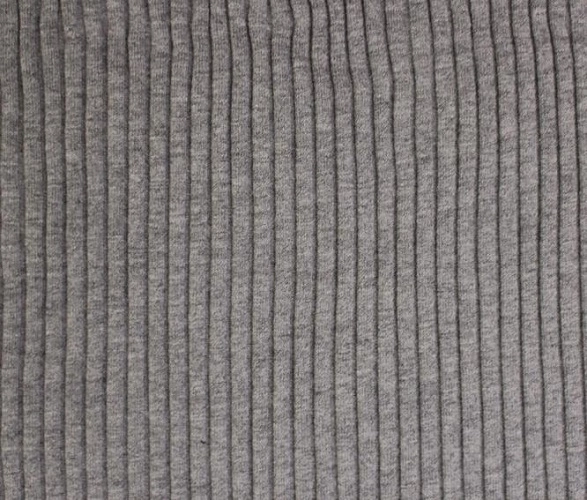
- Rib Knit: Alternates knit and purl stitches to create vertical ribs. Rib knits have excellent elasticity and are widely used for cuffs, collars, and waistbands.
- Purl Knit: Formed using alternating courses of knit and purl stitches, giving the same appearance on both sides. Purl knits are heavier, more elastic, and less prone to curling.
- Interlock Knit: Made by intermeshing two layers of jersey fabrics, resulting in a thick, stable, and smooth fabric with minimal curl and excellent dimensional stability.
3.2 Warp Knitting
Warp knitting forms loops vertically along the length of the fabric using multiple yarns. Warp knitting is faster and more suitable for producing large volumes of fabric with minimal stretch along the length.
Common warp-knit types:
- Tricot: Smooth on the front and slightly textured on the back. Tricot fabrics are lightweight, drapable, and widely used in lingerie, sportswear, and linings.
- Raschel: Produces openwork or lace-like patterns. Raschel knits can mimic lace, netting, or complex decorative motifs and are used in apparel, home textiles, and industrial applications.
4. Technical Properties of Knitted Fabrics
Knitted fabrics possess unique mechanical and physical properties that differentiate them from woven fabrics:
4.1 Elasticity and Recovery
The looped structure allows knitted fabrics to stretch and recover. Stretch is greatest across courses (horizontal direction) and lower along wales (vertical direction). The degree of elasticity depends on:
- Yarn type and twist
- Knitting density and gauge
- Fabric structure (rib, jersey, interlock)
4.2 Drape and Flexibility
Knitted fabrics have superior drape compared to woven fabrics. Lightweight weft knits exhibit excellent fluidity, making them ideal for garments that require graceful movement.
4.3 Thermal Insulation
The air trapped between loops acts as an insulator, making knitted fabrics warmer. Fabrics like fleece or thermal knits enhance heat retention due to pile formation or brushed surfaces.
4.4 Comfort and Breathability
Knits conform to body contours and allow good ventilation. The porosity and loop spacing influence moisture management and wearer comfort, making knits suitable for sportswear and casual wear.
4.5 Dimensional Stability
Knitted fabrics are prone to shrinkage and distortion due to loop mobility. Stabilizing techniques, such as heat-setting synthetic fibers or blending fibers, are often applied to maintain shape.
5. Yarn Selection for Knitting
Yarn characteristics strongly influence knitted fabric performance:
- Fiber Type: Natural fibers (cotton, wool) provide comfort and breathability; synthetics (polyester, nylon, spandex) enhance elasticity, durability, and moisture management.
- Yarn Twist: Higher twist improves strength but may reduce softness.
- Yarn Count: Fine yarns produce lightweight, smooth fabrics, while coarse yarns yield heavy, textured knits.
6. Finishing Processes for Knitted Fabrics
Finishing treatments enhance fabric appearance, performance, and usability:
- Washing and Softening: Improve hand feel and reduce shrinkage.
- Heat Setting: Stabilizes synthetic fabrics and prevents distortion.
- Brushing or Napping: Adds softness and creates thermal insulating surfaces.
- Chemical Treatments: Include flame retardancy, antimicrobial finishes, or water repellency for specialized applications.
7. Applications of Knitted Fabrics
Knitted fabrics are used across a wide spectrum of industries due to their versatility:
7.1 Apparel
- T-shirts, sweaters, hoodies, socks, lingerie, activewear, and swimwear.
- Knitwear provides comfort, stretch, and fashion adaptability.
7.2 Industrial Textiles
- Netting, filters, geotextiles, and protective fabrics.
- Warp knits like Raschel fabrics are common in automotive and construction uses.
7.3 Technical and Smart Textiles
- Medical bandages, compression garments, and wearable electronics.
- Knits are ideal for applications requiring conformity to body shape and stretch recovery.
8. Innovations in Knitting Technology
Modern knitting technologies have expanded the capabilities of knitted fabrics:
- Seamless Knitting: Produces garments without seams, enhancing comfort and fit.
- 3D Knitting: Enables complex, three-dimensional shapes for footwear, technical components, and cushioning.
- Smart Knits: Integrate conductive or sensing fibers for health monitoring, energy storage, and interactive textiles.
9. Challenges and Considerations
Despite their versatility, knitted fabrics present challenges:
- Snagging: The looped structure is prone to pulls and runs.
- Shape Retention: Knits may stretch out of shape under stress.
- Care Requirements: Knits often require gentle washing and handling to maintain integrity.
Advances in fiber engineering, knitting machines, and finishing methods continue to mitigate these challenges.
Knitted fabrics are a cornerstone of modern textiles, prized for their elasticity, comfort, and adaptability. Their diverse structures—from simple jersey to intricate warp knits—allow them to meet a wide range of aesthetic, functional, and technical requirements. Ongoing innovations in yarns, knitting techniques, and smart textiles promise to expand their applications further, cementing the role of knitted fabrics as both functional and fashion-forward solutions in the textile industry.