0086-18057388688


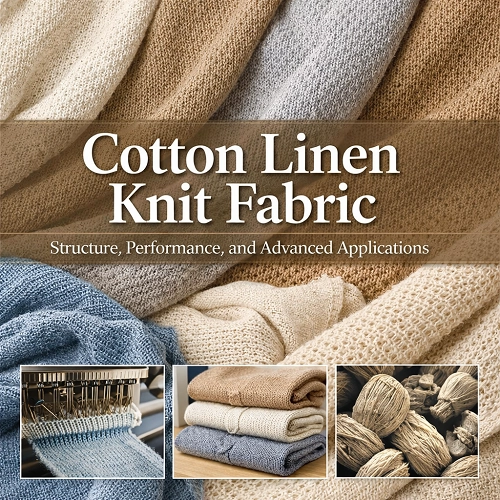
Cotton Linen Knit Fabric: Structure, Performance, and Advanced Applications
Cotton linen knit fabric represents a sophisticated hybrid textile that combines fiber blending (cotton + linen) with knit construction techniques, resulting in a material that is breathable, flexible, and adaptable across fashion and technical applications.
1. Material Composition and Structural Fundamentals
1.1 Fiber Blend: Cotton + Linen Synergy
Cotton linen knit fabric is produced by blending:
- Cotton fibers → soft, flexible, moisture-absorbent
- Linen (flax) fibers → मजबूत, breathable, moisture-wicking
This blend is engineered to balance performance:
- Linen provides cooling, airflow, and durability
- Cotton contributes softness, pliability, and ease of care
Blending reduces linen’s natural stiffness and wrinkling while improving comfort and cost efficiency.
1.2 Knit Construction vs. Woven Structure
Unlike woven fabrics, knit fabrics are constructed through interlooping yarns, which introduces:
- Elasticity and stretch
- Improved drape
- Enhanced comfort in dynamic wear
Knit structures (jersey, rib, interlock) create mechanical stretch even when fibers themselves (like linen) have low elasticity.
2. Key Physical and Mechanical Properties
2.1 Breathability and Thermal Regulation
Cotton linen knit fabrics exhibit exceptional airflow:
- Linen fibers allow high air permeability and cooling
- Cotton enhances moisture absorption and comfort
Result: a fabric ideal for hot and humid environments.
2.2 Moisture Management
- Linen can absorb significant moisture without feeling damp
- Cotton aids in wicking and retention balance
This dual mechanism ensures:
- Reduced skin irritation
- Faster drying compared to pure cotton
2.3 Mechanical Behavior
| Property | Behavior |
| Stretch | Moderate (from knit structure, not fibers) |
| Recovery | Limited unless elastane is added |
| Strength | High (linen reinforcement) |
| Abrasion resistance | Good |
| Dimensional stability | Moderate (may stretch or “grow”) |
Linen’s low elasticity can cause shape distortion over time, especially in knit formats.
2.4 Surface Characteristics
- Slightly textured (“slub” effect from linen fibers)
- Softer than pure linen but less smooth than cotton
- Matte to semi-lustrous finish
2.5 Wrinkling and Crease Resistance
- Pure linen wrinkles easily
- Cotton reduces wrinkle formation
- Knit structure further minimizes visible creasing
Result: relaxed aesthetic with reduced maintenance
3. Processing and Manufacturing Considerations
3.1 Yarn Formation Challenges
- Linen fibers are long, stiff, and irregular
- Cotton fibers are shorter and more uniform
Blending requires:
- Careful fiber alignment
- Controlled spinning tension
- Optimization of yarn twist
3.2 Knitting Parameters
Key technical variables:
- Gauge selection (fine gauge for lightweight apparel)
- Loop length control (affects drape and stability)
- Yarn tension (critical due to linen stiffness)
3.3 Finishing Techniques
To enhance usability:
- Enzyme washing → improves softness
- Pre-shrinking (sanforization) → reduces dimensional instability
- Softening agents → improve hand feel
4. Advantages Over Pure Fiber Fabrics
4.1 Compared to 100% Linen
- Less wrinkling
- Softer hand feel
- Easier care
4.2 Compared to 100% Cotton Knit
- Better cooling performance
- Enhanced durability
- More premium aesthetic
5. Limitations and Technical Constraints
Despite its benefits, cotton linen knit fabric has notable challenges:
5.1 Dimensional Instability
- Knit fabrics can stretch out of shape
- Linen contributes to “growth” under gravity
5.2 Limited Elastic Recovery
- Without elastane, recovery is weak
- Garments may lose structure over time
5.3 Processing Complexity
- Fiber incompatibility can cause uneven yarn quality
- Requires careful blending and finishing
5.4 Cost Considerations
- Linen increases production cost compared to cotton-only knits
6. Applications Across Industries
6.1 Apparel
Most common use cases:
- T-shirts and tops
- Summer dresses
- Lightweight sweaters
- Casualwear and resort wear
The fabric’s stretch and breathability make it ideal for warm-weather garments.
6.2 Loungewear and Sleepwear
- Comfortable against skin
- Moisture control enhances sleep comfort
6.3 Active and Lifestyle Wear
While not performance-grade like synthetics, it is used in:
- Yoga wear (low-intensity)
- Travel clothing
6.4 Home Textiles (Emerging Use)
- Lightweight throws
- Decorative fabrics
- Cushion covers
7. Sustainability and Environmental Impact
Cotton linen knit fabric is considered environmentally favorable due to:
- Natural fiber composition
- Linen’s low water and chemical requirements
- Biodegradability of both fibers
Linen, in particular, is recognized as a low-impact fiber with strong sustainability credentials.
8. Design and Product Development Considerations
8.1 Fabric Weight Selection
- Lightweight (120–160 GSM): T-shirts
- Medium (160–220 GSM): dresses, tops
- Heavy (>220 GSM): knit outerwear
8.2 Blend Ratios
Typical ratios:
- 55% linen / 45% cotton → more texture, cooler feel
- 30% linen / 70% cotton → softer, more stable
8.3 Pattern Engineering
Designers must account for:
- Fabric stretch direction
- Potential shrinkage
- Relaxation after wear
9. Care and Maintenance
Recommended care practices:
- Machine wash cold or gentle cycle
- Avoid harsh bleach (damages linen fibers)
- Air dry to maintain shape
- Light ironing or steaming if needed
10. Future Trends and Innovations
Emerging developments include:
- Blends with elastane for improved recovery
- Bio-finished linen fibers for enhanced softness
- Circular textile systems using biodegradable blends
Cotton linen knit fabric stands at the intersection of natural fiber engineering and modern textile construction. By merging linen’s breathability and durability with cotton’s softness and knit elasticity, it delivers a highly versatile material suited for contemporary apparel and sustainable design.