01 / IntroductionWhat Is Scuba Fabric?
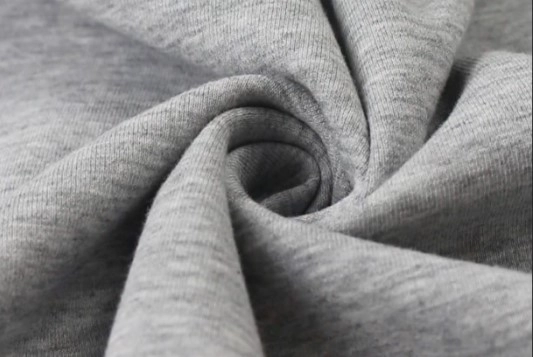
Scuba fabric is a smooth, firm, double-knit textile characterized by its dense loop structure, minimal stretch in the warp direction, and distinctive compressed hand feel. Despite its name borrowing from the underwater diving discipline — where neoprene wetsuits set the benchmark for body-conforming structure — modern fashion and technical scuba fabric bears no neoprene content. Instead, it replicates the smooth, slightly rigid aesthetic and structural resilience of neoprene through an entirely different fiber chemistry and knitting architecture.
Among the many fiber blends used to produce scuba, the 52% cotton / 48% polyester composition has established itself as a benchmark formulation across multiple market segments. This near-parity blend — sometimes called a "cotton-forward polyester blend" — is engineered to capture the best of both primary fiber families: the breathability and natural comfort of cotton on one side, and the dimensional stability, shape retention, and durability of polyester on the other.
This guide offers a rigorous, practitioner-level examination of 52/48 cotton polyester scuba: from the polymer physics underlying each fiber to the end-use performance envelopes that define where this textile excels and where alternatives should be considered. Whether you are a garment designer specifying materials, a production manager evaluating suppliers, or a buyer at a brand seeking technical clarity, the material here is designed to serve your decision-making directly.
02 / Fiber ScienceCotton vs. Polyester in Blend
Understanding any blended fabric begins with the intrinsic properties of each constituent fiber. In the 52/48 cotton-polyester case, we have two of the world's most commercially significant textile fibers — one natural, one synthetic — whose strengths and weaknesses are almost precisely complementary.
Cotton: The Natural Foundation
Cotton (Gossypium spp.) is a cellulosic seed-hair fiber composed principally of alpha-cellulose (approximately 88–96% by dry weight), with minor fractions of waxes, pectins, proteins, and ash. At the molecular level, cellulose chains are arranged in a fibrillar hierarchy: elementary fibrils (3–4 nm in diameter) aggregate into microfibrils, which in turn form the macrofibrillar structure of the cotton cell wall.
This hydrogen-bonded cellulose network gives cotton its defining characteristic: strong moisture absorbency (approximately 7–8% standard moisture regain at 65% RH, 20°C) and the wicking capillarity that transfers moisture away from the skin. For a body-skimming fabric category like scuba, this moisture management from the face layer is critical to wearer comfort during extended wear.
Cotton's tensile strength (typically 3–5 cN/dtex for ring-spun yarns) is adequate for most apparel applications, but it exhibits relatively low elastic recovery — meaning a 100% cotton scuba would relax and lose body over time. It is also susceptible to acid hydrolysis, cellulosic crocking, and shrinkage under repeated laundering unless stabilized by finishing treatments.
Polyester: The Engineering Backbone
Polyester (polyethylene terephthalate, PET) is a synthetic thermoplastic polymer formed by condensation polymerization of ethylene glycol and terephthalic acid. Its semi-crystalline morphology — domains of ordered crystallite interspersed with amorphous regions — provides a molecular architecture that is fundamentally different from cotton's and produces complementary performance characteristics.
Polyester has a moisture regain near zero (~0.4% at standard conditions), making it largely hydrophobic. In a blend, this hydrophobicity helps the fabric dry quickly and resist mildew. More importantly for scuba, polyester imparts excellent shape retention, wrinkle resistance, and dimensional stability across laundering cycles. Its tenacity (4.5–7.5 cN/dtex depending on draw ratio) significantly exceeds that of cotton, and its elastic recovery from small extensions (under 2%) is near complete.
Polyester's glass transition temperature (Tg ≈ 67–81°C) and melting point (Tm ≈ 255–260°C) permit heat-setting at commercially accessible temperatures — a critical factor in producing the pressed, smooth surface finish that defines quality scuba fabric.
Cotton Contribution
Moisture absorption & wicking, natural breathability, soft hand feel against skin, natural aesthetic, biodegradability, dyeability with reactive dyes.
Polyester Contribution
Dimensional stability, shape retention, wrinkle resistance, quick-dry performance, abrasion resistance, heat-set response, lower pilling tendency in dense knit.
03 / Blend RatioThe 52/48 Ratio — Engineering the Balance
Blend ratio selection is not arbitrary; it is the outcome of systematic trade-off analysis between competing performance axes. The 52/48 split — 52% cotton and 48% polyester — occupies a carefully considered position that differs materially from adjacent formulations (e.g., 65/35 or 50/50) in measurable ways.
Compared to a 65/35 cotton-polyester blend (common in jersey fabrics), the higher polyester content in 52/48 scuba delivers measurably superior dimensional stability and wrinkle recovery. Compared to a 50/50 split, the cotton majority in the 52/48 formulation ensures the fabric passes industry-standard moisture-management thresholds and retains eligibility for natural-content marketing claims in most jurisdictions.
From a manufacturing standpoint, the 52/48 blend also behaves favorably during heat-setting. Because polyester is the phase that responds to thermal finishing, having 48% polyester content ensures sufficient thermoplastic mass to stabilize loop geometry during the calendering or heat-setting passes that give scuba its characteristic smooth, pressed surface. A lower polyester content would require higher temperatures or longer dwell times to achieve comparable surface quality.
04 / ConstructionKnit Construction & Fabric Architecture
Scuba fabric is produced on a double-jersey (also called interlock or double-knit) circular knitting machine. Unlike single-jersey fabrics — which are formed on one needle bed and exhibit characteristic curl at the edges — double-jersey fabrics are constructed simultaneously on two opposing needle beds, producing two interlocked fabric layers that form a unified structure.
Machine Configuration
Industrial scuba production typically uses large-diameter circular knitting machines (28–36 inch diameter) with gauge settings between 28 and 32 needles per inch (NPI). Higher gauge machines produce finer, smoother surfaces appropriate for fashion-grade scuba, while lower gauges yield heavier technical variants. The needle arrangement — typically in a rib-gaiting configuration — ensures that face and back loops interlock at every course, contributing to the fabric's hallmark stability.
Yarn Specifications
For 52/48 cotton-polyester scuba in the standard weight range (200–280 g/m²), typical yarn parameters are:
| Parameter | Cotton Component | Polyester Component |
|---|---|---|
| Yarn Count (Ne) | 30s–40s ring spun | 75D–150D DTY / FDY |
| Twist Direction | Z-twist (typical) | N/A (filament) |
| Tenacity | ~3.5–4.5 cN/dtex | ~4.5–6.5 cN/dtex |
| Elongation at Break | 5–8% | 20–35% |
| Moisture Regain | ~7.5% | ~0.4% |
| Specific Gravity | 1.50–1.54 g/cm³ | 1.38–1.40 g/cm³ |
Loop Structure & Stitch Density
Scuba's dense, stiff body derives from high stitch density — the number of courses (horizontal rows) and wales (vertical columns) per unit area. Premium scuba grades typically achieve 32–40 courses/cm and 28–36 wales/cm. This density, combined with tightly controlled loop length (the amount of yarn consumed per stitch), produces the characteristic "neoprene-like" firmness without any added foam or laminate layer.
The interlock architecture means each wale on the face is directly bonded to a corresponding wale on the back through shared yarn loops. This structural coupling is the mechanism behind scuba's unusual combination: it behaves as a single, thick fabric rather than two thin fabrics bonded together, which is why it resists delamination and distortion that can afflict laminated alternatives.
05 / PerformancePerformance Properties & Technical Benchmarks
The following properties represent typical values for a production-grade 52/48 cotton-polyester scuba fabric at approximately 240 g/m², 165 cm width, processed through standard heat-setting and finishing. Actual values will vary by specific construction and finishing protocol.
| Property | Typical Value | Test Method Reference |
|---|---|---|
| Weight | 220–260 g/m² | ISO 3801 |
| Width (finished) | 155–170 cm | ISO 22198 |
| Elongation (weft) | 80–120% | ISO 13934-1 |
| Elongation (warp) | 30–55% | ISO 13934-1 |
| Elastic Recovery (weft, 50% ext.) | ≥ 85% | ISO 20932-1 |
| Pilling Resistance | Grade 4–5 (after 2,000 rubs) | ISO 12945-2 Martindale |
| Abrasion Resistance | ≥ 20,000 cycles | ISO 12947-2 |
| Colorfastness — Washing | Grade 4 (colour change) | ISO 105-C06 |
| Colorfastness — Rubbing (dry) | Grade 4 | ISO 105-X12 |
| Colorfastness — Light | Grade 4 (reactive-dyed cotton) | ISO 105-B02 |
| Moisture Regain (fabric) | ~4.2% | ASTM D2654 |
| Air Permeability | 20–50 mm/s at 100 Pa | ISO 9237 |
| Dimensional Stability (wash) | ±2–3% | ISO 6330 (40°C) |
| Thickness | 0.60–0.85 mm | ISO 5084 |
Stretch Behavior in Detail
One of the most important performance characteristics of scuba for garment design is its stretch profile. Unlike four-way stretch fabrics containing spandex/elastane, scuba achieves its stretch entirely through the geometry of the double-knit loop structure — specifically the yarn crimp that is released under tension. This produces a distinctly different stretch feel: firmer initial resistance, moderate total elongation (higher in the weft/cross-direction due to loop geometry), and good but not exceptional elastic recovery.
The practical implication is that scuba garments offer a "supported" fit — they hold body shape and create visual smoothing — rather than the "second-skin" fit associated with spandex-containing compression fabrics. This character makes 52/48 cotton-polyester scuba ideal for structured silhouettes in dresses, skirts, tailored pants, and blazers.
06 / ApplicationsApplications Across Industry Segments
Fashion Apparel
The largest application by volume for cotton-polyester scuba is womenswear and menswear fashion. The fabric's ability to hold sharp tailored edges without lining — producing a structured silhouette from a single fabric layer — makes it cost-effective and design-versatile. Bodycon dresses, A-line skirts, tailored trousers, and structured blazers are among the most common garment categories where scuba delivers a premium visual result at accessible production cost.
Activewear & Performance Apparel
While elastane-containing fabrics dominate high-performance sportswear, the 52/48 cotton-polyester scuba finds application in the growing "athleisure" and "active lifestyle" segment where comfort and appearance are equally weighted. Yoga cover-ups, gym jackets, casual training shorts, and studio-to-street tops benefit from scuba's quick-dry polyester fraction combined with cotton's natural comfort feel.
Corporate & Uniform Sector
Corporate wear demands dimensional stability through repeated laundering cycles, minimal wrinkling during extended wear, and a professional appearance that requires minimal ironing. The 52/48 scuba satisfies all three criteria. Because the polyester component is heat-set, the fabric retains its pressed appearance through standard commercial laundering at 40°C far better than comparable cotton-dominant wovens.
Childrenswear
The cotton majority in 52/48 scuba makes it well-suited for childrenswear where skin sensitivity is a primary concern and OEKO-TEX certification is frequently required by retail buyers. The polyester component reduces shrinkage — a persistent challenge with high-cotton childrenswear styles that must maintain correct sizing through repeated home washes.
07 / SustainabilitySustainability Considerations
The sustainability profile of 52/48 cotton-polyester scuba is nuanced and depends significantly on the sourcing choices made upstream of the knitting process. As global retail brands intensify their scrutiny of supply-chain environmental credentials, understanding these nuances is commercially important.
Cotton Sourcing Options
Conventional cotton accounts for approximately 2.5% of global arable land while using a disproportionate share of agricultural water and insecticide. Specifying organic cotton (certified to GOTS or OCS standards) for the 52% cotton fraction significantly reduces the environmental footprint of the fabric. Cotton certified under the Better Cotton Initiative (BCI) or US Pima standards provides intermediate improvement with lower cost premium relative to certified organic.
Zhejiang Guocheng Linen Knitting Co., Ltd holds organic content certifications including GOTS and OCS, providing buyers who specify organic cotton-containing blends with a verified supply-chain option. The company's certification portfolio also includes GRS (Global Recycled Standard) — relevant for buyers considering recycled polyester in the 48% polyester fraction.
Recycled Polyester (rPET)
Replacing virgin PET with recycled polyester (rPET) derived from post-consumer plastic bottles or post-industrial textile waste reduces the fossil-resource consumption and greenhouse gas emissions associated with the polyester fraction. GRS-certified rPET can be incorporated into 52/48 scuba constructions with minimal impact on mechanical performance, though care is required in yarn selection to avoid inconsistency in yarn diameter or surface texture that could affect scuba's smooth surface finish.
End-of-Life Considerations
A binary cotton-polyester blend without additional fibers (particularly elastane, nylon, or viscose) offers a cleaner pathway to emerging chemical textile recycling technologies. Hydrothermal and enzymatic depolymerization processes currently under industrial development target PET-cotton blends specifically, as these represent the highest-volume blended textile waste stream globally. Specifying a 52/48 cotton-polyester scuba without spandex positions the fabric favorably within the circular economy trajectory of the industry.
08 / Care & QualityCare, Finishing & Quality Control
Recommended Care Protocol
| Care Step | Recommendation | Rationale |
|---|---|---|
| Machine Wash | 30–40°C, gentle cycle | Prevents excess loop abrasion; preserves heat-set geometry |
| Bleaching | Non-chlorine bleach only | Chlorine bleach degrades cotton cellulose and yellows polyester |
| Tumble Dry | Low heat or line dry | High heat exceeds polyester Tg; causes surface glazing and puckering |
| Ironing | Medium (cotton setting) with steam | Steam assists loop relaxation; avoid high-heat direct iron contact |
| Dry Clean | Acceptable; not required | Solvent cleaning compatible with both fibers |
Finishing Processes
The finishing sequence for 52/48 cotton-polyester scuba typically involves: scouring (to remove knitting oils and natural cotton waxes), dyeing (using a two-step process — reactive dyestuffs for cotton at alkaline pH, disperse dyestuffs for polyester at high temperature — or a combined exhaust bath with specialized dye systems), heat-setting (on a tenter frame at 185–195°C to stabilize dimensions and activate polyester thermoplasticity), and optionally surface finishing (calendering for added luster, bio-polishing to reduce surface hairiness on the cotton fraction, or moisture-wicking finishes applied by padding).
Quality Control Parameters
Key in-line and end-of-process quality checkpoints for scuba production include: weight uniformity (within ±5% of nominal specification across the fabric roll), width consistency (±1.5 cm), loop evenness inspection under raking light, colorfastness testing per ISO 105 series, and dimensional stability verification through a standard domestic wash simulation at 40°C before dispatch.
09 / Market ContextMarket Context & Sourcing Insights
The global technical and fashion knitted fabric market continues to grow, driven by the persistent consumer preference for stretch and comfort in apparel and by the expansion of the athleisure category. Within this broader market, blended double-knit fabrics like cotton-polyester scuba represent a mid-premium segment positioned between commodity single jerseys and high-value elastane-containing performance fabrics.
China remains the world's dominant producer of knitted fabrics by volume, with Zhejiang Province — home to Tongxiang, Shaoxing, and Hangzhou textile clusters — producing a disproportionate share of knitting industry output. The cluster advantages include dense supply chains for both natural and synthetic yarns, established finishing infrastructure, and export logistics networks serving North American and European apparel brands.
Industry observers at Zhejiang Guocheng's industry news section have tracked growing interest in blended constructions that avoid single-fiber dependency — a supply-chain resilience theme that accelerated after pandemic-related cotton price volatility in 2021–2022 and the ongoing geopolitical pressures on cotton from specific origins. The 52/48 cotton-polyester scuba blend benefits from this trend because it diversifies fiber sourcing across both agricultural and petrochemical supply chains.
Minimum order quantities (MOQs) for custom 52/48 scuba production at Chinese knitting mills typically range from 300 kg to 1,000 kg per color for custom dyeing, though stock programs of neutral colors (ecru, black, navy, grey melange) can be available from as low as 50 meters from larger facilities. Lead times for custom production generally run 30–45 days from yarn procurement to delivery to port, with design-to-sample cycles of 10–15 days possible for buyers working with established mill partners.
10 / SourcingSourcing from Zhejiang Guocheng Linen Knitting Co., Ltd
Zhejiang Guocheng Linen Knitting Co., Ltd is one of China's pioneering knitted fabric manufacturers, established in 2011 in Tongxiang City, Zhejiang Province. The company operates across a 34,000 m² facility with approximately 150 specialized workers and an annual production capacity of around 5,000 tonnes.
While the company's heritage is rooted in linen and linen-blend knits — where it was among the first manufacturers in China to achieve large-scale knitted linen production — Guocheng has expanded its portfolio across a comprehensive range of blended knitted fabrics. The cotton, lyocell, modal, bamboo, and polyester fabric category encompasses the fiber types relevant to 52/48 cotton-polyester scuba production.
Approximately 70% of Guocheng's output is exported to European and American markets — a commercial orientation that has necessitated the accumulation of internationally recognized certifications including GOTS (Global Organic Textile Standard), OCS (Organic Content Standard), GRS (Global Recycled Standard), RWS (Responsible Wool Standard), and OEKO-TEX Standard 100. For buyers requiring certified fiber content in the 52% cotton component of a scuba fabric — whether organic or recycled content — these certifications provide the audit chain necessary for downstream consumer claims.
The company's international market reach spans Brazil, Peru, Chile, Thailand, Morocco, India, Iran, Colombia, Ghana, Croatia, Romania, the USA, Sri Lanka, and the UK, reflecting deep experience navigating the compliance, labelling, and logistics requirements of diverse importing jurisdictions.
For technical inquiries and sampling, prospective buyers can contact Guocheng at +86-18057388688 or email joy@zhuochengzz.cn. The company's manufacturing capability page provides additional detail on production infrastructure and capacity.
Certifications Held
GOTS · OCS · GRS · RWS · OEKO-TEX Standard 100 — enabling certified organic, recycled, and standard-compliant supply chain documentation.
Production Capacity
~5,000 tonnes annual output across 34,000 m² facility. 70% export-oriented. Strong European and American brand compliance experience.
Explore Knitted Fabric Products
Browse Zhejiang Guocheng's full range of blended knitted fabrics — from cotton-polyester constructions to linen blends, organic content, and recycled materials.
View All Products